

Historic Home Buying Guide for Covington GA
A historic home can give you something a new subdivision rarely can: original architecture, mature surroundings, distinctive craftsmanship, and a property with a story behind it. But buying a historic home in Covington GA also means understanding inspections, renovation restrictions, insurance, financing, maintenance, and preservation rules before falling in love with a front porch or century-old details.
That matters especially in Covington, where the city’s historic districts contain residential architecture dating from the 1800s through the early 20th century. Covington’s Historic District currently has a median listing price around $429,900, compared with a citywide median sale price of approximately $314,829 for the three months ending June 2026.
Buyers who want to compare historic properties with newer and more conventional options can begin with current homes for sale in Covington GA.
This guide explains where historic homes are found, current price benchmarks, inspections, renovation rules, insurance, financing, maintenance, and what to check before making an offer in 2026.
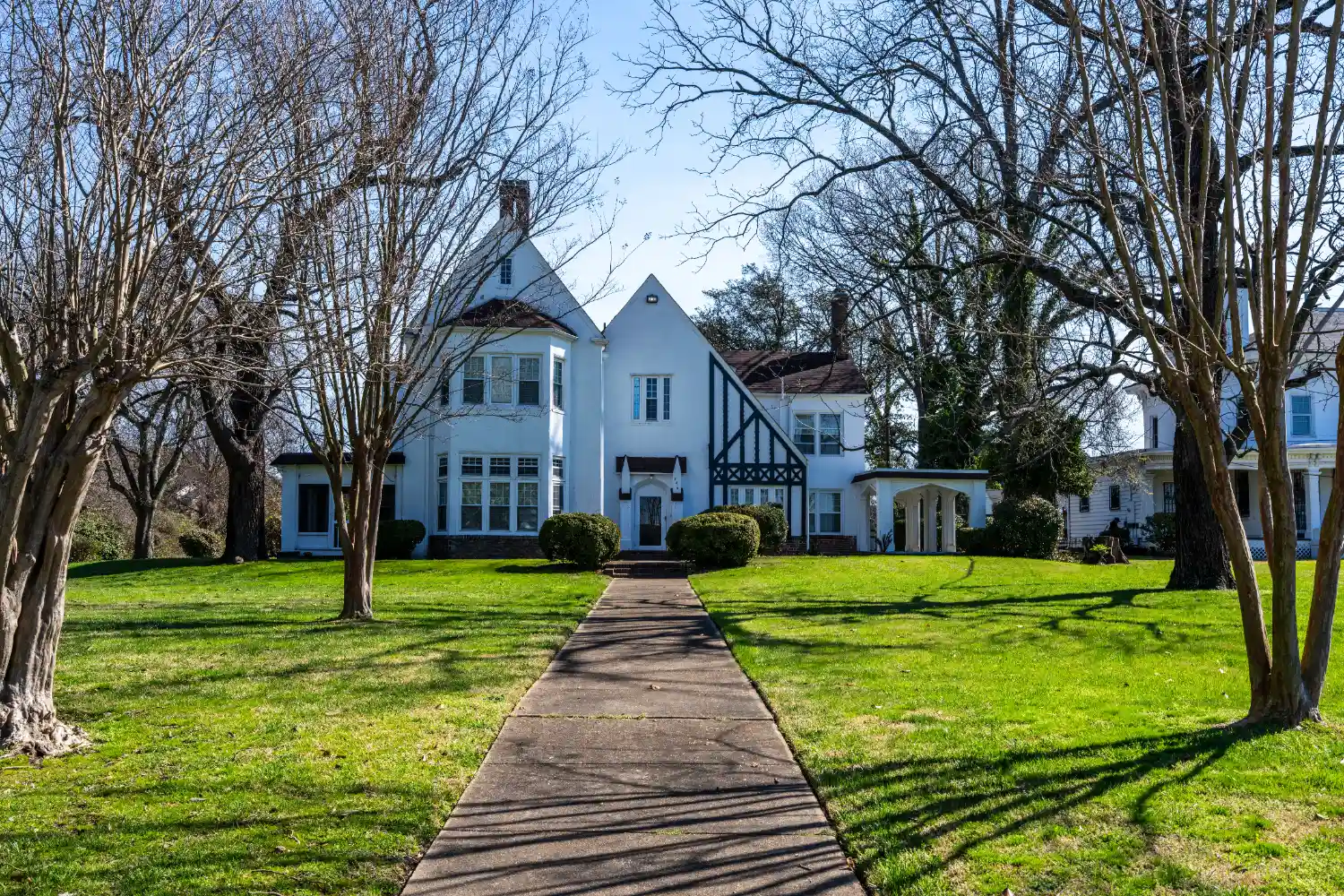
What Does the Historic Home Market Look Like in Covington in 2026?
Historic homes represent a distinctive part of the Covington market, but they should not be priced using the citywide median alone.
For buyers considering buying a historic home in Covington GA, these market differences make it important to compare historic properties with similar homes rather than relying only on the overall citywide median.
Realtor.com currently reports approximately 17 active homes for sale in the Covington Historic District, with a median listing price around $429,900 and average marketing time of approximately 56 days. The median listing price per square foot is approximately $205.
For comparison, Covington overall had a median sale price of approximately $314,829 for the three months ending June 2026. The broader 30014 ZIP code, which includes Downtown Covington and much of the older housing stock, had a median sale price of approximately $349,921 during the same period.
Condition, lot size, renovation quality, architectural details, square footage, location, and historic-district status can all create major price differences.
2026 price benchmarks
- Covington citywide median sale price: $314,829
- 30014 median sale price: $349,921
- Covington Historic District median listing price: about $429,900
- Current historic-district inventory: about 17 homes
- Historic District average days on market: about 56 days
Covington Historic District and North Covington Historic District
Covington does not have just one type of historic housing environment.
Location matters when buying a historic home in Covington GA because historic-district status can affect the property’s character, renovation options, and surrounding streetscape.
The city’s preservation guidelines identify the North Covington Historic District and the historic district covering the older central and south Covington area.
North Covington is a small residential district roughly three-quarters of a mile northwest of Downtown Covington and was locally designated in April 2000. The broader Covington district contains residential and commercial buildings dating from the 1820s through the 1940s and was also locally designated in 2000.
Floyd Street is particularly important to Covington’s architectural history, with homes representing different periods and architectural styles.
Key benefits buyers may value
- Distinctive architectural details
- Established streetscapes
- Mature lots and landscaping
- Proximity to Downtown Covington from many properties
- Homes that differ substantially from subdivision floor plans
- Opportunities to purchase renovated or unrestored properties
Price context
Price is only one consideration when buying a historic home in Covington GA, because location, renovation quality, historic-district status, and property condition can all affect value.
The Covington Historic District currently carries a median listing price of approximately $429,900, while the broader 30014 market has a median sale price around $349,921. North Covington has very limited active inventory at the moment—Realtor.com recently showed only two matching properties, including a listing around $289,999—so treating a tiny sample as a reliable neighborhood median would be misleading.
Property types: Older detached homes, cottages, Craftsman/Bungalow designs, period residences and renovated historic houses.
For buyers researching schools, Newton County Schools includes nearby Covington campuses such as East Newton Elementary School, Indian Creek Middle School, Eastside High School, Newton High School, and Alcovy High School. School attendance is address-specific, so buyers should confirm a property’s actual assignment directly with Newton County Schools rather than choosing a home based on a general neighborhood label.
Buyers who also want to understand the downtown experience, community amenities, and day-to-day lifestyle can read more about living in Covington GA.
Historic District Rules You Need to Understand Before Renovating
One of the biggest differences between simply buying an older home and purchasing inside a designated local historic district is the potential review process for exterior changes.
One of the most important parts of buying a historic home in Covington GA is understanding whether planned exterior changes may require historic-preservation approval.
Covington’s Historic Preservation Commission reviews proposed repairs, alterations, additions, and new construction within local historic districts. Certain exterior material changes may require a Certificate of Appropriateness, commonly called a COA.
Changes involving siding, windows, roofing, exterior doors, architectural features, fences, additions, new construction, demolition, or relocation may require review.
For buyers, the practical lesson is simple: do not assume every exterior renovation can be completed without approval after closing.
According to the City of Covington, changes that can require a COA include:
- Changing exterior siding or other materials
- Replacing or changing windows
- Changing roofing materials or roof form
- Replacing exterior doors
- Altering architectural features
- Installing certain fences
- Landscaping changes covered by the ordinance
- Constructing additions
- New construction
- Demolition or relocation of structures
Not every repair requires a full commission hearing. The city’s guidelines explain that some work can receive administrative approval—for example, replacing asphalt shingles with asphalt shingles when the roofline remains unchanged.
If Historic Preservation Commission approval is required, the city’s current FAQ lists a $150 application fee, while administratively approved requests do not carry that COA application fee. Separate permit fees can still apply.
The practical lesson for buyers is important: do not assume you can remodel the exterior however you want after closing.
If you already know you want replacement windows, a porch enclosure, different siding, a substantial addition, or major exterior renovation, discuss the idea with Covington Planning and Zoning before you purchase.
Before buying a historic home in Covington GA, buyers with renovation plans should confirm which exterior improvements may require approval before assuming those changes can be completed after closing.
What Should a Historic Home Inspection Cover?
A thorough inspection is especially important when buying a historic home in Covington GA because older properties may contain structural, electrical, plumbing, roofing, moisture, or other issues that are not immediately visible.
A historic home inspection should evaluate the accessible condition of the property while recognizing that older construction methods and materials may differ from those found in newer homes.
Buyers should pay particular attention to the foundation, structural components, roof, flashing, drainage, electrical system, plumbing, HVAC, moisture issues, and evidence of previous repairs.
For homes built before 1978, buyers should also review applicable lead-based paint disclosures and available information about known lead hazards.
The goal is not simply to identify cosmetic issues. It is to understand the condition and potential ownership costs of the home before closing.
Foundation and structural components
Look for evidence of:
- Settlement
- Cracking
- Moisture intrusion
- Deteriorated mortar
- Rot around crawlspaces
- Drainage problems
- Previous structural repairs
Look for evidence of:
Roof, flashing, and drainage
Historic rooflines can be part of the architectural character of the property. Covington’s guidelines note that changes to roof pitch, shape, or material can significantly alter a historic structure’s appearance.
Ask about roof age, active leaks, flashing, chimneys, gutters, and previous repairs.
Electrical and plumbing
Older homes may have undergone multiple generations of renovation. The age of the house alone does not tell you what wiring or plumbing is currently installed.
A buyer should determine what has been replaced, what remains original or older, whether permits exist for major work, and whether additional specialist evaluation is advisable.
Lead-based paint
For most housing built before 1978, federal disclosure rules require sellers to provide buyers with available information about known lead-based paint and lead hazards before the buyer becomes obligated under the contract. EPA notes that lead paint remains present in many older homes and is particularly concerning when paint deteriorates.
Use your Covington GA home buying checklist to keep inspection, financing, due diligence, and closing deadlines organized.
Renovating a Historic Home Without Removing Its Character
Renovation is often where the difference between an older house and a historic property becomes most obvious.
Buyers interested in buying a historic home in Covington GA should consider renovation plans before closing, especially when original materials or exterior architectural features may need to be preserved.
Covington’s preservation guidelines emphasize repairing historic materials before replacing them whenever practical. When original materials require replacement, compatible materials that preserve the property’s appearance and character may be recommended.
Before purchasing a home that needs substantial work, separate essential repairs from optional improvements.
Essential work may include structural repairs, roof leaks, electrical problems, plumbing failures, HVAC replacement, moisture issues, termite damage, or other safety concerns.
Optional improvements may include kitchen remodeling, bathroom updates, interior paint, refinishing floors, storage improvements, lighting changes, and cosmetic landscaping.
Buyers should then determine which planned improvements may require historic-district approval.
Essential work
- Active roof leaks
- Structural problems
- Unsafe electrical conditions
- Plumbing failures
- HVAC replacement
- Moisture or drainage problems
- Termite or wood damage
- Safety issues
Optional improvements
- Kitchen remodeling
- Bathroom updates
- Interior paint
- Refinishing floors
- Storage improvements
- Lighting changes
- Cosmetic landscaping
Then determine which improvements could require historic-district approval.
Avoid assuming that a renovation shown on a television program or completed on a house outside the district can automatically be duplicated on your property.
A contractor estimate should also be based on the actual house. Historic-home renovation costs can vary considerably because original materials, custom dimensions, plaster, masonry, wood windows, old framing, and hidden conditions may require more specialized labor than standard new-construction work.
Historic Home Financing and Insurance
Most historic homes do not require a special mortgage simply because they are old. Lenders are generally more concerned with the property’s condition, appraisal, insurability, and whether required repairs affect safety or structural soundness.
Financing and insurance should be reviewed early when buying a historic home in Covington GA, particularly if the property needs significant repairs or contains older systems and materials.
A buyer purchasing an older home that requires substantial rehabilitation may also want to discuss renovation-financing options with a qualified lender.
Insurance deserves attention early in the process as well. Older homes may contain roofing, electrical, plumbing, heating systems, historic materials, or architectural features that affect replacement costs and insurance requirements.
Buyers should ask insurers about roof age, electrical and plumbing systems, heating, replacement-cost estimates, historic materials, detached structures, prior claims, water-damage coverage, and any special inspection requirements.
Market value and replacement cost are not always the same, which is another reason to obtain an insurance quote before getting too close to closing.
Historic home insurance deserves early attention
Do not wait until three days before closing to obtain an insurance quote.
Georgia’s Office of the Commissioner of Insurance explains that replacement-cost coverage pays to repair or rebuild using materials of similar kind and quality without deducting depreciation. That distinction can matter with older houses containing features that may cost more to reproduce than standard modern components.
Ask an insurer about:
- Roof age
- Electrical system
- Plumbing
- Heating system
- Replacement-cost estimate
- Historic materials
- Detached structures
- Prior claims
- Water-damage coverage
- Any special inspection requirements
Historic Home vs. New Construction in Covington
Choosing between a historic house and a new build is less about which category is “better” and more about what kind of ownership experience you want.
For buyers deciding between buying a historic home in Covington GA and choosing new construction, the biggest differences often involve maintenance, architectural character, renovation flexibility, and the age of major systems.
If you are buying a historic home in Covington GA, compare its long-term maintenance needs and renovation flexibility with what a newer home may offer.
Covington’s Historic District currently has a median listing price around $429,900, while the broader citywide median sale price is approximately $314,829. Meanwhile, the local market also includes substantial new-construction inventory in the $300,000s and $400,000s, giving buyers a real opportunity to compare older character properties with newly built homes.
Historic homes may offer
- Original architectural character
- Established streets
- Mature landscaping
- Distinctive floor plans
- Larger porches
- Period woodwork and masonry
- Proximity to Downtown Covington for some properties
New construction may offer
- New roofing and mechanical systems
- Modern electrical and plumbing
- Contemporary floor plans
- Builder warranty coverage
- Fewer immediate renovation projects
- Potential builder incentives
Property types available
Historic inventory tends toward detached cottages, traditional houses, Craftsman/Bungalow architecture, Greek Revival and Neo-Classical influences, and renovated older homes. New construction typically includes modern detached single-family homes and planned-community properties.
A renovated historic home can also sit somewhere between the two experiences. The key is verifying what was actually renovated. New countertops and flooring do not tell you whether plumbing, wiring, roofing, sewer connections, foundation issues, or HVAC have been addressed.
Will a Historic Home Hold Its Resale Value?
There is no guaranteed appreciation rate for a historic home, and buyers should be cautious of anyone promising one.
Resale potential is worth considering when buying a historic home in Covington GA, but no buyer should assume that historic status alone guarantees stronger appreciation.
Historic properties can have characteristics that are difficult to reproduce—architecture, location, lot configuration, craftsmanship, or proximity to Downtown Covington—but resale still depends on market conditions, maintenance, renovations, pricing, and buyer demand.
The current Covington Historic District median listing price of roughly $429,900 is above Covington’s broader median sale price of approximately $314,829 and above 30014’s roughly $349,921 median sale price. However, these are different datasets and should not be interpreted as proof that historic designation automatically creates a specific price premium.
For resale, documentation can be valuable.
Keep records of:
- Roof replacement
- HVAC installation
- Plumbing work
- Electrical upgrades
- Foundation repairs
- COA approvals
- Building permits
- Window restoration
- Masonry work
- Professional inspections
- Lead remediation when applicable
Maintenance also matters. Deferred repairs on a century-old property can become more complicated than the same deferred maintenance on a newer home.
A buyer should therefore view historic-home ownership as both a real estate purchase and a long-term maintenance commitment.
Historic Home Buyer Checklist for Covington GA
Before buying a historic home in Covington GA, review the property’s condition, historic-district status, insurance options, financing requirements, renovation plans, and expected maintenance costs.
Before the offer
- Confirm the home’s construction year.
- Determine whether it is inside a locally designated historic district.
- Review current comparable sales.
- Compare the price with renovated and unrenovated properties.
- Request available renovation and permit records.
- Obtain an insurance quote early.
During due diligence
- Complete an independent home inspection.
- Consider specialist evaluations when warranted.
- Review foundation and drainage.
- Determine roof age.
- Identify plumbing materials.
- Review the electrical system.
- Check HVAC age.
- Review seller lead-paint disclosures for applicable pre-1978 homes.
- Check for evidence of unpermitted alterations.
- Verify whether planned exterior changes require a COA.
Before closing
- Confirm financing requirements.
- Review final insurance coverage.
- Budget for immediate repairs.
- Confirm tax and utility estimates.
- Keep enough reserves for post-closing maintenance.
- Verify school assignment by exact address if relevant to your search.
Careful planning before buying a historic home in Covington GA can help you balance the property’s character with inspection findings, renovation needs, insurance costs, and long-term maintenance.
Buying a historic home in Covington GA can be rewarding when you want architecture and character that newer construction cannot easily reproduce. The important part is understanding what you are buying before the charm of original floors, fireplaces, porches, or century-old details overshadows the practical questions.
If you are comparing Covington historic homes for sale, renovated older properties, or newer alternatives, Nikkia Thomas can help you evaluate the current inventory, recent pricing, location, property condition, and questions to investigate before making an offer. A historic home does not need to be perfect—but you should understand its condition, restrictions, and ownership costs before making it yours.