

How to Research a Home in Covington GA Before You Schedule a Showing
A listing can look perfect online and still turn out to be a poor fit once you dig into the details. Knowing how to research a home in Covington GA before scheduling a showing can help you spend your time on properties that better match your budget, location needs, and ownership plans.
The goal is not to perform a home inspection from your laptop or make a final buying decision before seeing the property. Instead, pre-showing research helps you verify basic facts, review listing and sale history, understand taxes and parcel information, look for permit or renovation questions, identify HOA considerations, and compare the asking price with the broader Covington market.
This is especially useful if you are comparing several listings, relocating from Atlanta, or simply do not want to spend every weekend touring homes that could have been ruled out with 15 minutes of research.
Start by shortlisting current homes for sale in Covington GA, then use the steps below to decide which properties are actually worth seeing in person.
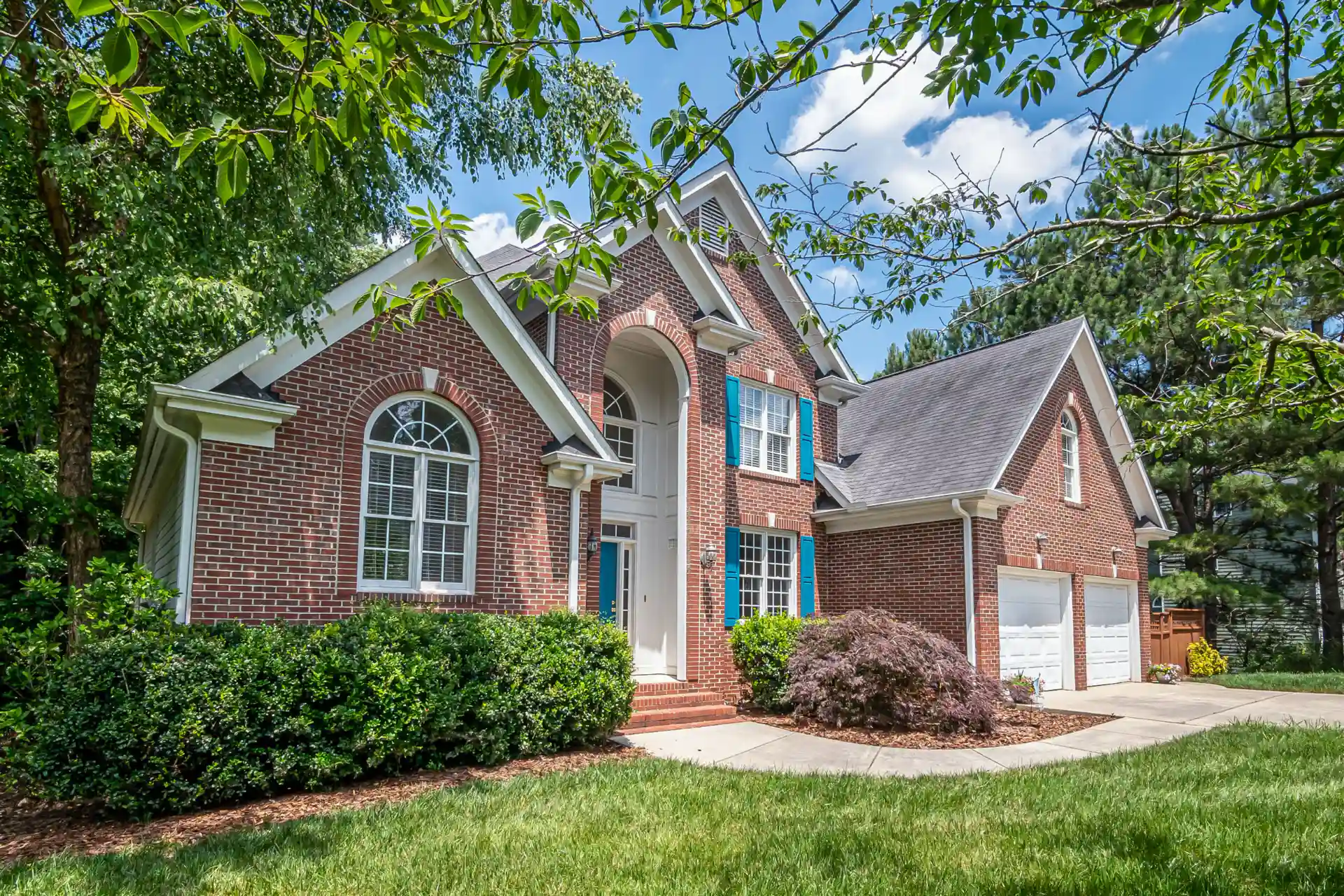
1. Read the Entire Listing—Then Check the Listing History
Many buyers begin Covington GA property research by looking at photos, bedrooms, bathrooms, and asking price. Those details matter, but the full listing can reveal much more.
Read the property description carefully. Look for the year built, square footage, lot size, property type, HOA information, parking, utility information, renovation claims, and anything the seller or listing agent highlights repeatedly.
Then review the home listing history in Covington GA when it is available.
Details worth checking
- Original listing date
- Current asking price
- Previous asking prices
- Price reductions or increases
- Whether the listing was removed and relisted
- Previous sale dates
- Previous recorded sale prices
- Days on market
- Property type and year built
- Lot size and listed square footage
A price reduction does not automatically mean something is wrong with the property. It may reflect an initial asking price that was higher than buyers were willing to pay. Likewise, a recently relisted property deserves context rather than an immediate negative conclusion.
The useful question is: What story does the listing history tell?
For example, if a home was listed at $399,000, reduced to $374,000, removed, and later returned at $359,000, that history gives you useful questions to ask before committing time to a showing.
Recent Covington sales demonstrate why context matters. Homes can sell across a wide range of prices depending on size, location, acreage, age, condition, and property type.
Learning how to research a home in Covington GA starts with understanding the listing history, previous sales, and any major price changes. These details can help you decide whether a property deserves a closer look before you spend time scheduling a showing.
2. Research Previous Sales and Property Records
The next step is checking property records in Covington GA rather than relying only on the marketing information in the listing.
Newton County’s official resources provide access to property and parcel information. The Newton County Board of Tax Assessors maintains property-value, assessment, and mapping information for tax purposes, making county records a useful place to compare basic facts with what appears in a real estate listing.
When researching a property, useful records may include:
- Parcel identification
- Owner of record
- Assessed information
- Lot or parcel size
- Property classification
- Building information
- Recorded sales history
- Map information
Why previous sale history matters
Suppose a property currently has a $375,000 asking price but previously sold for $240,000 several years ago. That difference does not automatically mean the current price is unreasonable. The home may have appreciated, been renovated, gained additional improvements, or simply reflect a different market.
Instead, previous home sales in Covington GA give you questions to investigate:
- When did the owner buy the property?
- Were major improvements made afterward?
- Does the current listing claim renovations?
- Does the property record appear consistent with the listing?
- How does the asking price compare with recent nearby sales?
Treat automated property estimates the same way: as reference points, not appraisals or guaranteed market values.
Newton County GIS information can also help buyers understand parcel location and other mapping details, but online GIS data should not be treated as legal proof of exact property boundaries. If precise boundaries matter, a survey or other appropriate documentation may be needed.
Knowing how to research a home in Covington GA also means comparing the listing details with available county property and parcel records. If the information does not match, treat that as a reason to ask questions rather than immediately assuming there is a problem.
3. Check Property Taxes Without Turning Your Research Into a Tax Audit
Before scheduling a showing, it is useful to know whether the tax information generally aligns with your expectations.
Reviewing Covington GA property tax records can help you understand the property’s recorded assessment and recent tax history. However, the tax bill shown for a current owner should not automatically be treated as the amount you will pay after purchasing the property.
For a deeper explanation of assessments, exemptions, tax rates, and buyer considerations, use the separate guide to Covington GA property taxes rather than trying to solve every tax question during the pre-showing stage.
For pre-showing research, focus on:
- Recent property-tax amount
- Assessed information
- Parcel identification
- Whether the record matches the property you are researching
- Any obvious discrepancy between listing facts and county information
Newton County’s official information identifies the Tax Commissioner as the office handling property-tax functions, while the Tax Assessor maintains property-value and assessment records.
The practical benefit is simple. If two homes both cost around $350,000 but have noticeably different tax histories, that is useful information to investigate before choosing which property deserves priority.
Tax research should be one input—not a substitute for lender estimates, current tax calculations, or professional advice specific to the transaction.
4. Verify Lot, Parcel, Permit, and Renovation Information
A listing that says “fully renovated,” “new addition,” or “finished basement” may deserve extra research before you schedule a tour.
Newton County requires permits for new buildings and additions and, in many cases, remodeling involving structural work or an increase in living space. Its examples of improvements that commonly require permits include additions, decks, foundation work, major electrical, plumbing and HVAC installations, pools, detached garages, and certain other structures.
For properties inside Covington city limits, the City of Covington Planning and Development Department handles construction permitting and inspections. For unincorporated Newton County, the county’s Building Permits and Inspections Division handles applicable permitting and inspections.
Questions that may be worth researching
- Does the advertised square footage appear consistent with available records?
- Is an addition visible in photos or mentioned in the description?
- Has a basement or attic been converted into living space?
- Is there a detached garage, pool, deck, or other major improvement?
- When does the listing say renovations occurred?
- Are permit records available for work that would normally require them?
This does not mean buyers should assume unpermitted work whenever records are difficult to locate. Records can be incomplete, jurisdictions differ, and older work may require additional research.
The purpose is simply to identify something worth asking about before arranging your schedule around a property.
For buyers looking at older resale homes or extensively renovated properties, this step can be especially useful.
5. Research HOA Information, Restrictions, and Ongoing Costs
If the listing mentions an HOA, do not stop after reading the monthly or annual fee.
Preliminary HOA information in Covington GA can help you decide whether a community is compatible with how you intend to use the property. Detailed HOA documents may not always be available before a showing, but you can still identify questions early.
Ask about items such as:
- Current HOA dues
- What the dues cover
- Community amenities
- Architectural guidelines
- Parking restrictions
- Fence or exterior-modification rules
- Rental restrictions
- Rules affecting boats, trailers, or recreational vehicles
- Whether additional assessments are known or disclosed
If HOA documents before buying a home are available, save them for a careful review rather than relying on a listing summary.
For example, a home may fit your budget and have the garage and yard you want, but proposed plans for fencing, parking, renting the property later, or adding an exterior structure could be affected by community rules.
That makes HOA research useful before a showing because it can eliminate properties that conflict with an important requirement.
At the same time, avoid assuming that every subdivision operates the same way. HOA fees and restrictions vary from community to community, and the governing documents for the specific property are what ultimately matter.
6. Check Flood Information, Maps, Road Access, and the Property's Location
Online research should also help you understand where the home sits—not just what is inside it.
For flood zone information in Covington GA, buyers can use official mapping resources such as FEMA’s Flood Map Service Center, which allows searches by street address, community, or coordinates. Newton County GIS can also provide useful planning and mapping information, although the county cautions that GIS information should not be relied upon for legal property-line or topographical determinations.
Before booking a showing, check:
- Property location on a map
- Road type and access
- Distance to I-20 or your regular route
- Approximate commute to work
- Nearby commercial or industrial uses
- Parcel configuration
- Visible waterways or drainage features
- FEMA flood mapping
- Distance to services you use regularly
If you need to check flood risk before buying in Covington GA, do not treat a map search as the final answer regarding insurance requirements or site-specific risk. It is an early research step that tells you whether additional questions may be appropriate.
For relocating buyers, this location research can be particularly valuable. A property that looks like a bargain online may become less attractive if the actual daily drive does not fit your schedule.
Likewise, a slightly more expensive home could remain on your shortlist because its location works significantly better for your routine.
7. Use 2026 Covington Pricing to Put the Asking Price in Context
Researching a listing without understanding the broader market can make price history difficult to interpret.
Zillow reported a typical Covington home value of $296,379 as of July 31, 2026, along with a $324,967 median list price, $279,150 median sale price for June, 544 homes in for-sale inventory, and approximately 47 median days to pending.
Realtor.com uses different methodology and reported a June 2026 citywide median listing price of $354,900, a $305,000 median sold price, and 697 active listings.
Neither number tells you what a particular home is worth. The value of the data is context.
30014 vs. 30016
In June 2026:
30014
- Median listing price: $385,000
- Median sold price: $378,990
- Median price per square foot: $178
- Median days on market: 60
- 342 active listings
Common property types include single-family resale homes, ranch homes, historic properties, condos, new construction, and larger-lot homes.
Schools physically located in 30014 include East Newton Elementary School, Indian Creek Middle School, and Eastside High School. School assignment must be confirmed for the specific property rather than inferred from the ZIP code.
30016
- Median listing price: $315,000
- Median sold price: $281,750
- Median price per square foot: $159
- Median days on market: 57
- 355 active listings
Property types commonly include ranch homes, traditional single-family properties, subdivision homes, new construction, and larger-lot homes.
The benefit of this ZIP-level research is that a $340,000 asking price has different context depending on the property, location, size, condition, and nearby comparable sales.
For more market-level context, review the Covington housing market before deciding whether a listing price deserves further investigation.
8. Decide Whether the Home Is Worth Scheduling
Keep the property on your showing list if:
- The asking price fits your working budget
- Property records generally align with the listing
- The property type and lot meet your basic needs
- The location works for your routine
- HOA information does not reveal an obvious conflict
- Listing and sale history give you questions rather than deal breakers
- Any renovation or permit questions seem worth investigating further
Consider deprioritizing it if:
- The commute clearly does not work
- An HOA restriction conflicts with a non-negotiable need
- The property type or lot does not meet your requirements
- The listing contains obvious factual inconsistencies you cannot resolve
- Your research reveals an issue that makes the home unsuitable regardless of condition
This is the most important distinction in property due diligence before a showing: you are filtering, not inspecting.
Once you schedule the tour, the next stage becomes physically evaluating the home. That should remain separate from pre-showing property research so you do not confuse online records with what can only be understood in person.
Questions to Ask Before Scheduling a Showing
Useful questions to ask before scheduling a showing include:
- Has the seller made major renovations or additions?
- Is a seller disclosure available?
- Are HOA dues and basic restrictions available?
- How old is the listing, and have there been recent price changes?
- Are there known additions or converted spaces?
- Is the listed square footage based on public records?
- Are there documents related to major recent improvements?
- Is the property currently occupied?
- Are there showing restrictions buyers should know about?
You do not need complete answers to every question before viewing a house. Some information naturally becomes available later.
The goal is to resolve anything that could make the showing unnecessary.
Ready to Research Your Next Covington Home?
Learning how to research a home in Covington GA can make your search more efficient because it helps separate attractive listings from properties that actually deserve your time.
Start with listing and sale history. Verify basic property and parcel information. Review tax records at a high level. Look for questions about additions or renovations. Check HOA information when applicable, research the property’s map location and flood information, and compare the asking price with relevant 2026 market context.
None of those steps replaces seeing the home, professional inspections, surveys, title work, or other appropriate due diligence. They simply help you arrive at the showing better informed.
If you understand how to research a home in Covington GA, you can narrow your shortlist before spending time on unnecessary showings. A focused research process can help you prioritize the properties that best match your budget, location needs, and ownership plans.
If you have several Covington listings saved and are unsure which ones are worth touring, Nikkia Thomas can help you compare the available information, identify useful questions, and narrow your shortlist before scheduling showings. That can make your home search more focused without rushing you into a property that has not earned a closer look.