

Atlanta Property Tax Guide
Buying a home in Atlanta means budgeting for more than the purchase price and mortgage payment. Atlanta property taxes can make a noticeable difference in your monthly housing cost, and the amount you pay depends on more than one simple “Atlanta tax rate.”
A home inside Atlanta may be located in either Fulton County or DeKalb County. Your tax bill can include city, county, and school-system levies, while homestead exemptions may reduce the taxable value if the property is your primary residence.
Georgia also calculates residential property taxes from an assessed value that is generally 40% of fair market value, rather than directly from the full market value of the home.
That combination is why Atlanta property taxes can differ even between two homes with similar purchase prices.
For context, Atlanta’s median sale price was about $429,238 for the three months ending May 2026, according to Redfin. If you are still comparing properties and price points, you can also explore homes for sale in Atlanta GA.
This guide explains how property taxes work in Atlanta, the Fulton-versus-DeKalb difference, homestead exemptions, assessments, appeals, and how buyers can estimate taxes before making an offer.
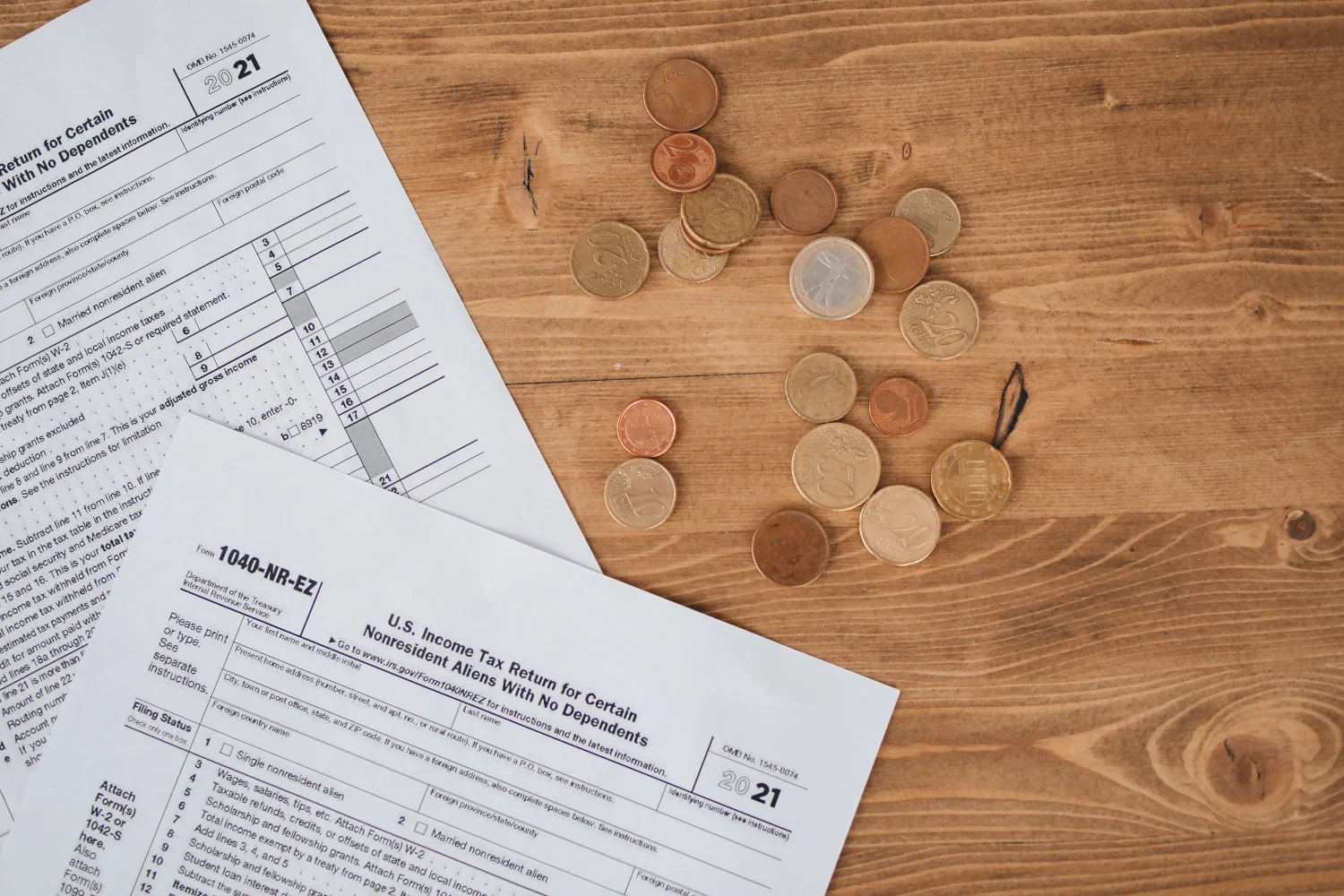
How Do Atlanta Property Taxes Work?
The first thing to understand about Atlanta property taxes is that your home’s purchase price and its taxable value are not necessarily the same number.
Georgia generally assesses real property at 40% of fair market value. A millage rate is then applied to the taxable assessed value after applicable exemptions.
One mill equals $1 of tax for every $1,000 of assessed value.
For example, consider a home with a fair market value of $500,000:
- Fair market value: $500,000
- 40% assessed value: $200,000
- Applicable exemptions: subtracted from assessed value
- Millage rates: applied to the resulting taxable value
The important part is that Atlanta does not have one universal property-tax percentage that you can safely multiply by every home’s purchase price.
Depending on the property's exact address, the final bill may include taxes associated with:
- City of Atlanta
- Fulton County or DeKalb County
- Atlanta Public Schools
- Applicable bonds or other levies
- Any special taxing district affecting the property
The City of Atlanta’s fiscal-year 2026 annual millage rate was 11.37 mills, including its city levies.
That is only the city portion, however—not the home’s complete property-tax bill.
When estimating Atlanta property taxes, using only one tax rate can substantially oversimplify what you may actually owe.
Fulton County vs. DeKalb County Property Taxes in Atlanta
One of the most important things Atlanta buyers should check is the county listed for the property.
Most of Atlanta is associated with Fulton County, but portions of the City of Atlanta extend into DeKalb County.
That means two properties that both have “Atlanta, GA” addresses can have different county tax structures.
When comparing Atlanta property taxes, always start with the actual parcel address rather than assuming every Atlanta home is taxed the same way.
Fulton County property taxes
Fulton County’s approved FY2026 budget maintained an 8.87-mill property-tax assumption for county operations.
However, Fulton County also noted in June 2026 that its taxing jurisdictions—including cities, school boards, and county government—set annual millage rates separately.
Buyers therefore should not treat 8.87 mills as the total Atlanta tax rate or as a guaranteed final calculation for every 2026 property.
DeKalb County property taxes
DeKalb County’s adopted 2026 tax resolution specifies an 11.386-mill county levy for taxable property located within the City of Atlanta portion of DeKalb County.
That levy covers designated county purposes. City of Atlanta and applicable school taxes are separate components of the overall bill.
The takeaway is not simply that one county is “cheaper” than the other.
That comparison can be misleading because exemptions, taxable values, different levy components, and the individual property all matter.
When comparing Atlanta property taxes Fulton vs. DeKalb, look at:
- The property’s actual county
- Current assessed value
- Existing tax bill
- Homestead status
- Available exemptions
- Current-year millage rates
- Whether the prior owner qualified for exemptions that you may not receive
- Whether your own exemptions would be different
Fulton vs. DeKalb: Effective Tax Rate at a Glance
| County | Approx. Effective Rate | Typical Annual Bill |
|---|---|---|
| Fulton County | ~0.89%–1.05% | ~$3,800–$4,700 |
| DeKalb County | ~1.0% (est.) | ~$3,586 (typical homeowner) |
| Georgia state average | ~0.81%–0.83% | ~$2,341–$2,554 |
Figures are general estimates based on recent county and statewide data; your exact bill depends on the parcel, exemptions, and current-year millage rates.
Both Fulton and DeKalb effective rates run above the Georgia state average, largely due to Atlanta’s combined city, county, and school levies stacking on top of one another. This is one more reason to request the actual current tax bill for a specific parcel rather than relying on a single published rate.
When comparing Atlanta property taxes Fulton vs. DeKalb, look at: the property’s actual county, current assessed value, existing tax bill, homestead status, available exemptions, current-year millage rates, whether the prior owner qualified for exemptions that you may not receive, whether your own exemptions would be different.
For buyers, the property’s actual parcel record is much more useful than a generic online tax-rate percentage.
Atlanta Homestead Exemptions: What Homeowners Should Know
An Atlanta homestead exemption can reduce property taxes for qualifying owner-occupants, but buyers should not assume that an exemption automatically follows the house after a sale.
Homestead programs generally apply to a homeowner’s primary residence and can reduce the assessed value used for certain portions of the tax bill.
That makes exemption status an important part of estimating Atlanta property taxes after you become the owner.
Fulton County homestead exemption
Fulton County’s 2026 Homestead Exemption Guide states that qualifying homeowners occupying the property as of January 1 can receive a basic exemption that includes $30,000 off assessed value for county purposes and $2,000 for school purposes.
For qualifying City of Atlanta residents, the guide also specifies $30,000 off assessed value for City Operations, the City Park Fund, and City School purposes.
Fulton County’s standard application deadline is April 1 for the applicable tax year.
Once granted, most exemptions renew automatically as long as ownership and primary-residence requirements continue, although some specialized exemptions have different rules.
Fulton also has floating-homestead provisions.
Its guide explains that the local Fulton base value generally increases by the lesser of CPI or 3%, while the City of Atlanta’s applicable base-value provision uses a 2.6% annual adjustment.
A cap on a base value does not necessarily mean the final tax bill can never increase by more than that amount because tax rates and other factors may change.
DeKalb County homestead exemption
For 2026, DeKalb’s basic H1 exemption provides qualifying homeowners with $12,500 of assessed-value exemption for school taxes and $10,000 for county levies, except bonds.
There is no age or income requirement for the basic exemption.
DeKalb also applies a property assessment freeze to qualifying homestead properties for county assessments, subject to program rules.
The county notes that this freeze does not apply identically to every city, school, or other taxing component.
Senior, disability, veteran, and other specialized exemptions may provide additional tax relief in both counties.
Homeowners should check the current county requirements rather than assuming they qualify based only on age.
How Much Could Property Taxes Be on an Atlanta Home?
For buyers, estimating Atlanta property taxes before making an offer can help with budgeting, but the estimate needs to be understood for what it is.
Atlanta’s median sale price was approximately $429,238 for the three months ending May 2026.
At Georgia’s standard 40% assessment ratio, a $429,238 fair market value would translate to an assessed value of roughly $171,695 before exemptions.
To illustrate the math:
Home Value
$300,000
$400,000
$500,000
$700,000
40% Assessed Value
$120,000
$160,000
$200,000
$280,000
City Tax at 11.37 Mills*
about $1,364
about $1,819
about $2,274
about $3,184
*These examples show only the City of Atlanta’s 11.37-mill portion before exemptions. They are not estimates of the property’s complete annual tax bill.
County, school, exemptions, and other applicable levies must still be considered.
This is why an Atlanta property tax calculator should be used carefully.
A simple calculator may help with preliminary budgeting, but the existing tax record for the exact parcel is a better starting point.
There is another common buyer mistake: assuming the seller’s current tax bill will automatically become your tax bill.
The seller may have a homestead exemption, senior exemption, assessment freeze, or another benefit that applies specifically to that owner.
Your taxable value and exemptions after purchase can be different, which means your future Atlanta property taxes may also be different.
Before making an offer, ask for:
- Current annual property-tax bill
- Current assessed value
- Exemptions currently applied
- Parcel number
- County
- Estimated taxes without the seller’s exemptions, when relevant
That gives you a more realistic picture of future Atlanta homeownership costs.
Atlanta Property Tax Assessments and Appeals
Your Atlanta property tax assessment and your property-tax bill are related, but they are not the same document.
The county Board of Tax Assessors determines the property’s fair market value and assessed value.
The taxing authorities set applicable millage rates, and the Tax Commissioner uses the resulting information to calculate the tax bill.
Fulton County describes this process directly: the Tax Commissioner uses the appraised value, exemption status, and applicable millage rates to calculate taxes.
Changes in Atlanta property taxes can sometimes come from a change in assessed value rather than a change in the millage rate itself.
Georgia property owners generally have 45 days from the date of the assessment notice to file an assessment appeal with the County Board of Tax Assessors.
Appeals may address issues such as value, uniformity, taxability, or denial of an exemption.
For 2026, Fulton County mailed annual assessment notices in June and identified July 31, 2026 as the appeal deadline for most property owners, unless a different deadline appeared on the individual notice.
DeKalb likewise states that property owners have 45 days from the assessment-notice date to appeal.
When reviewing an assessment, check:
- Fair market value
- Square footage
- Bedroom and bathroom count
- Lot information
- Property condition
- Exemption status
- Comparable properties
- Whether renovations or additions are recorded correctly
If something appears incorrect, address it during the applicable appeal window rather than waiting until the tax bill arrives.
How Property Taxes Affect Your Monthly Housing Cost
Property taxes are easier to understand when you stop viewing them only as a once-a-year expense and start considering how they affect your full monthly housing budget.
For many financed purchases, the lender collects money for Atlanta property taxes through an escrow account as part of the monthly mortgage payment.
That means a change in the annual tax obligation can eventually change the required monthly escrow payment.
For example, an additional $1,200 per year in property taxes works out to roughly $100 per month.
That can matter when you are comparing two homes near the top of your comfortable payment range.
Property taxes should therefore be considered alongside:
- Principal and interest
- Homeowners insurance
- HOA dues
- Mortgage insurance, when applicable
- Utilities
- Maintenance
- Condo or townhome assessments
- Property taxes
If you want a broader picture of housing expenses beyond Atlanta property taxes, review the cost of living in Atlanta.
You can also use the site’s mortgage calculator to compare different purchase-price and payment scenarios.
Just remember that a calculator estimate should not replace the current tax record for the exact property.
The safer approach for an Atlanta buyer is to calculate affordability using a reasonable future tax estimate, not simply the seller’s current monthly payment.
This is particularly important for first-time buyers and relocation buyers who may not be familiar with Georgia’s 40% assessment system or Atlanta’s combination of city, county, and school levies.
Atlanta Property Tax Checklist for Home Buyers
Atlanta property taxes do not need to make a home purchase complicated, but they deserve to be reviewed before you commit to a property.
Before Making an Offer :
- Confirm whether the property is in Fulton County or DeKalb County
- Look up the current parcel record
- Review the current Atlanta property tax bill
- Check the fair market and assessed values
- Identify all exemptions currently applied
- Ask whether the seller has a homestead or senior exemption
- Do not assume the seller’s tax amount will continue after closing
After Estimating Your Costs :
- Estimate taxes using your expected exemption status
- Include property taxes in your monthly affordability calculation
- Confirm the current city, county, and school millage rates
- Review the annual assessment notice after becoming the owner
- Apply for qualifying homestead exemptions by the applicable deadline
- Check current county instructions because exemption and appeal procedures can change
For 2026 buyers, that last step is especially important. Tax rates are adopted annually, and exemption and assessment information can also change.
Tax rates are adopted annually, and 2026 has also included updated exemption and assessment information in both Fulton and DeKalb.
Atlanta Property Taxes: Final Thoughts
The goal is not to find the Atlanta home with the lowest tax bill.
A better approach is to understand how Atlanta property taxes fit into the complete ownership cost of each property before deciding which home fits your budget.
If you’re comparing Atlanta homes and want help understanding how a property’s current taxes, county, exemptions, and overall monthly costs fit into your purchase, Nikkia Thomas can help you review those details while you evaluate your options.
Property-tax information should be confirmed with the applicable tax authority, but understanding the numbers before making an offer can help you make a more informed buying decision.
Frequently Asked Questions
Atlanta’s median sale price was approximately $429,238 for the three months ending May 2026, according to Redfin. Realtor.com currently shows a median Atlanta listing price around $385,000, which is a different measurement because it reflects asking prices rather than completed sales. Home prices vary significantly by neighborhood and property type, so buyers should use the current value of the specific property when estimating taxes.
Atlanta gives buyers homes across a broad range of price points and property types, but property-tax planning requires attention because the city spans both Fulton and DeKalb counties. Properties can be subject to city, county, and Atlanta Public Schools taxes, and qualifying owner-occupants may receive homestead exemptions. Rather than deciding whether Atlanta is “good” based on taxes alone, buyers should compare the total monthly ownership cost of the specific homes they are considering.
There is no single best Atlanta school or area for every buyer. The right choice depends on your budget, commute, housing needs, and education priorities. School assignments vary by address, so buyers should always verify the exact property through the APS School Zone Locator.
Georgia generally assesses property at 40% of fair market value, then applicable exemptions are deducted before the relevant millage rates are applied. In Atlanta, the complete bill can involve city, county, and school-system levies, so there is no single tax percentage that accurately represents every property. Buyers should look up the actual parcel and its current assessment when estimating future taxes.
Yes, the county component can differ because Fulton County and DeKalb County establish their own tax structures and levies. For 2026, DeKalb adopted a 11.386-mill county levy for taxable property within the Atlanta portion of DeKalb County, while Fulton County’s FY2026 budget maintained an 8.87-mill county-operations assumption; that Fulton figure should not be treated as a complete Atlanta property-tax rate. City and school taxes, exemptions, and the individual property’s taxable value also affect the final bill.
The answer depends partly on which county contains the property and which exemption the homeowner qualifies for. Fulton County’s 2026 guide lists a basic exemption that includes $30,000 off assessed value for county purposes and $2,000 for school purposes, plus specified City of Atlanta relief for qualifying Atlanta residents. DeKalb’s 2026 basic H1 exemption provides $12,500 for school taxes and $10,000 for county levies, except bonds, with additional programs available for qualifying seniors, disabled residents, and veterans.
Yes. Georgia property owners generally have 45 days from the date of the assessment notice to file an appeal with the County Board of Tax Assessors. The appeal can address issues such as the property’s value, uniformity, taxability, or denial of an exemption. Because the deadline is tied to the assessment notice, homeowners should review the notice promptly rather than waiting for the later tax bill.